Healing Trauma Institute
Dr. Omar Reda
Psychiatrist · Trauma Expert · Author · Humanitarian
Harvard Trained
UCHealth
HTI Founder
UN & WHO Consultant
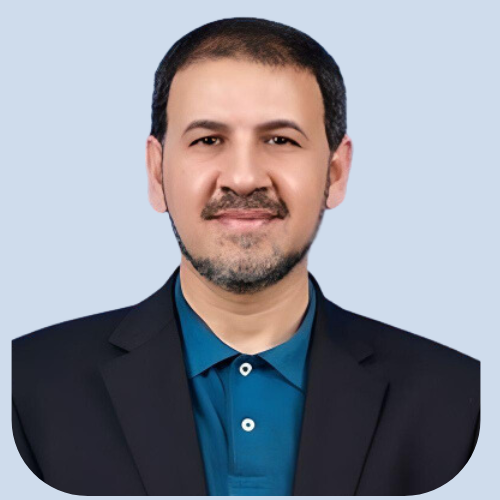
Psychiatrist · Trauma Expert · Author · Humanitarian
From the streets of Benghazi to the frontlines of healing.
"Loss became my first teacher. I learned that the invisible wounds are the most difficult to heal — and the most necessary."
Omar Reda was born in Benghazi, Libya, the son of a family that valued education, faith, and the bonds of community. His early childhood was shaped by the warmth of home — until grief arrived without warning. When he was six years old, his sister died of brain cancer. For a small boy who could not yet name what he was experiencing, something fundamental had shifted: the understanding that life contained pain that no one could see from the outside.
The loss did not harden him. Instead, it drew him toward medicine — toward the idea that human suffering was something that could be met, examined, and, with care, relieved. Long before he knew the word psychiatry, he had already made his most important clinical decision: he would pay attention to what other people were carrying.
"People don't come to doctors just to have their bodies examined. They come to be heard. I began to understand that listening was a form of healing."
At eleven years old, Omar nearly lost his life in a kidnapping attempt — an event that left no physical mark but carved something deep into his sense of safety in the world. Years later, he would recognize this for what it was: trauma. But at the time, life pressed forward, as it does, and he pursued his calling through medical school, where he chose emergency medicine, working at the sharp edge where lives hung in the balance.
In the emergency department, he discovered something that would define his career: patients did not only bring their bodies to him. They brought their stories — stories of violence, of loss, of things that had happened to them that no X-ray could detect. The invisible wounds were everywhere, and almost no one was trained to see them. He decided he would be.
"The judge said he could see no visible scars. I thought: yes. That is exactly the problem."
In 1999, Dr. Reda fled Libya, crossing the Mediterranean and eventually arriving in Britain to seek asylum. The application was rejected. The judge, reviewing his case, determined that he bore no visible scars — and therefore, by the logic of the system, had not been harmed enough. It was a moment that encapsulated everything he had come to understand about trauma: that the deepest wounds leave no marks a court can photograph.
He arrived in the United States five months after September 11th, 2001 — a Libyan Muslim entering a country raw with fear and grief. He met his wife in America. He enrolled in the Harvard Program in Refugee Trauma, where his personal experience and clinical training finally converged. He was not merely studying trauma. He was returning to his own wounds from the far side — now equipped to name them, and to help others do the same.
"I call myself a weaver of hope. Because hope is not found. It is made — thread by thread, connection by connection."
In the years that followed, Dr. Reda went to where the need was greatest. He worked in Libya, Syria, and Burma during active conflict — sitting with people in the middle of crisis, providing what the clinical system rarely offers at scale: presence, dignity, and a framework for making sense of what had happened to them. He collaborated with the United Nations and the World Health Organization, bringing a trauma-informed lens to the world's most complex humanitarian challenges.
Grief continued to find him. In 2014, his nephew was killed by extremists. In 2016, his mother died. But by now, Dr. Reda had spent a career turning grief into purpose. He founded the Healing Trauma Institute, developed two landmark models of care — Project Untangled and The Wounded Healer — and wrote eight books. He continues to practice psychiatry at UCHealth, and to train, teach, consult, and speak across the world.
His vision has never changed: to break the cycles of trauma-related dysfunction through education, support, empowerment, and the healing power of human connection. A man who was once told his wounds were invisible now spends his life helping others name theirs.
MD, Psychiatry
Board-certified psychiatrist with specialty in trauma-informed care
Harvard Program in Refugee Trauma
Graduate of Harvard's world-renowned refugee trauma program
Practicing Psychiatrist, UCHealth
Active clinical practice serving patients across Colorado
Founder & Director, HTI (since 2011)
Built the Healing Trauma Institute from a vision into a global resource
Project Untangled Model (Founder)
Original framework for breaking intergenerational trauma in families and communities
The Wounded Healer Model (Founder)
Self-care and resilience framework for caregivers and frontline workers
United Nations & WHO Collaboration
Psychosocial consultant and expert advisor to international humanitarian bodies
Author of 8 Published Books
Works translated and read by communities across the world
Psychosocial Consultant, Lamya's Poem
Contributed to the acclaimed animated film about the Syrian refugee crisis
Chapter Contributor: Islamophobia & Psychiatry
Academic chapter on the intersection of prejudice and mental health
Chapter Contributor: Antisemitism & Psychiatry
Academic exploration of hatred, identity, and the psychiatric dimension
Fieldwork: Libya, Syria & Burma
On-the-ground psychosocial support during active conflict and humanitarian crisis
"The invisible wounds
are the most difficult to heal."
— Dr. Omar Reda